
Animal welfare programme
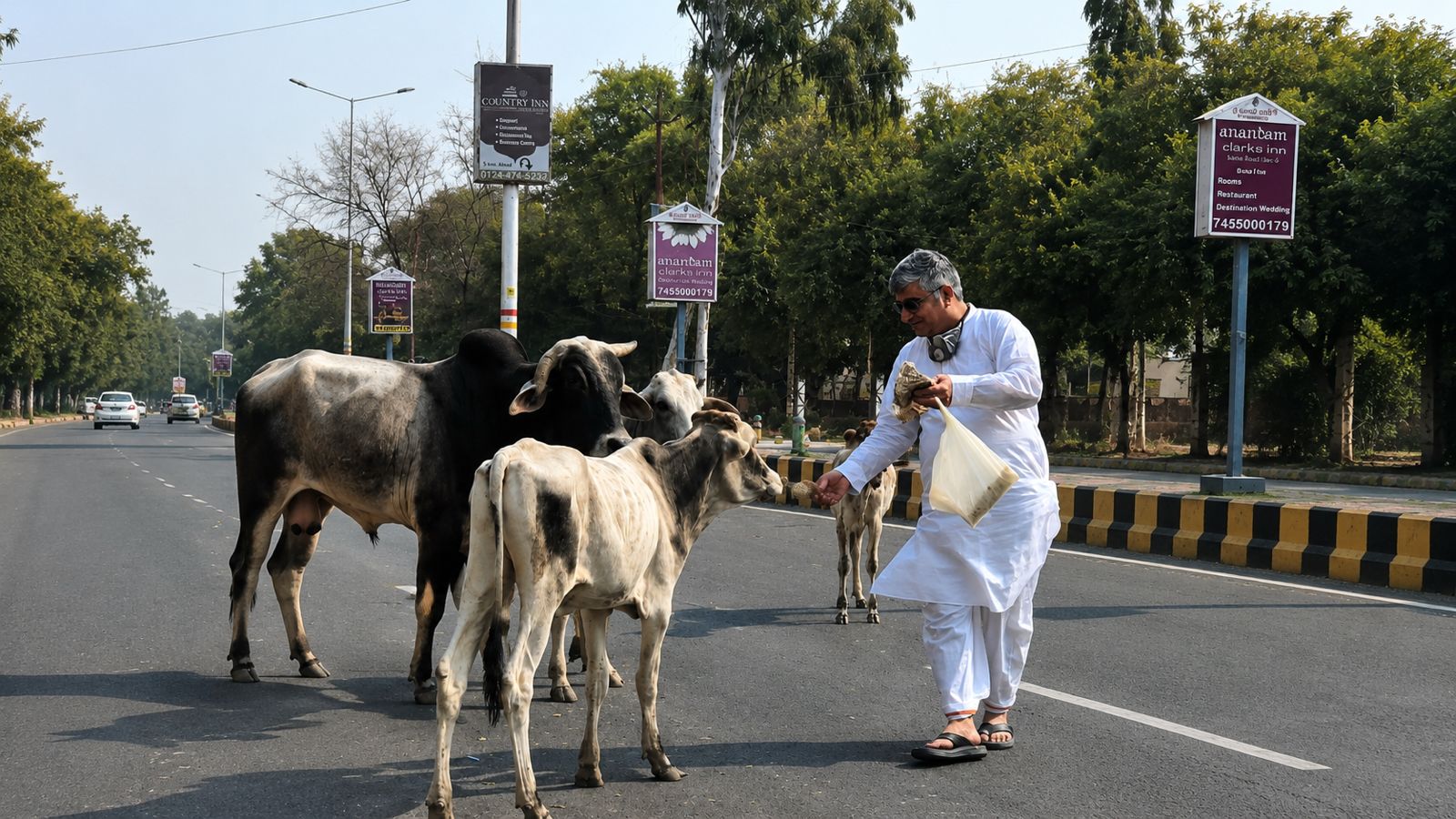
Stray cow feeding
Stray and abandoned cows often survive on roadside waste, which frequently includes plastic. Our feeding support aims to offer suitable fodder and clean water in a manner that is safe for the animals and considerate of the streets they share.
Ways to help
How you can help
Sponsor fodder
Contribute towards green fodder, dry fodder and water arrangements for a distribution point.
Volunteer with distribution
Help with loading, safe placement and clean-up during scheduled drives.
Connect a gaushala
If you work with a registered shelter, we would value a working relationship for cases needing long-term care.
Animal welfare
Stray dog feeding
Regular, responsible feeding that helps community dogs stay healthier and makes other care, such as vaccination or sterilisation, possible.

Animal welfare
Dog sterilisation drives
Humane population management carried out with qualified veterinary professionals, with proper pre-operative and post-operative care.
Animal welfare
Abandoned dog rescue
Assessment, safe handling, veterinary evaluation and recovery support for abandoned, injured or unwell dogs, with responsible rehabilitation where possible.
Animal welfare
Dog deworming & vaccination
Preventive care delivered under veterinary guidance — assessment, suitable schedules, records and follow-up for community dogs.
Questions
Frequently asked questions
Do you run a gaushala?
No. We support feeding and coordinate with existing shelters. A cow shelter is proposed as part of the Bhairav Dham project, which is not yet built.
Why is plastic such a serious problem?
Plastic swallowed while scavenging accumulates in the rumen, blocks digestion and can be fatal. Offering suitable fodder reduces the need to scavenge.
Can feeding create traffic problems?
It can, which is why distribution points are placed away from carriageways and cleared promptly after each drive.